Red Hot Markets | Keeping Connected
September 14, 2026
(Updated September 16th, 2026)
Red hot might be the best way to describe where things stand. The labor market is running red hot, with 162,000 new jobs in August blowing past the 53,000 estimate, and corporate earnings are just as scorching—S&P 500 profits jumped 52% Y/Y in Q2, the fastest pace since 2021, with the Magnificent 7 up a blistering 118.5%.
The U.S. economy is holding its own heat, with manufacturing and services activity firmly in expansion territory even as inflation simmers. That heat hasn't gone unnoticed at the Fed: Chairman Kevin Warsh used his Jackson Hole keynote to make clear that taming inflation remains the central bank's top priority, which was reflected in the recent rate hike (.25%), the first increase since 2023.
The eurozone is warming up too, with its composite PMI hitting an 8-month high of 52.0 as German manufacturing output heats up at its fastest pace since January 2022. China remains the cold spot in the room, with manufacturing activity contracting for a second straight month and non -manufacturing activity stuck below the expansion line.
It wasn't just the markets running hot this summer—record-breaking temperatures scorched much of the country, while the ongoing war involving Iran added another layer of heat to an already tense geopolitical backdrop. Diesel prices are also scorching, hitting an all-time high as wars on two continents strain global refining capacity, while India's economy is sizzling at 7.8% growth even as inflation risks smolder in the background.
With four straight years of strong markets now behind us, the question isn't whether things are heating up—it's how much longer this red-hot run can last, and if the Fed will need to continue to turn up the pressure to cool it down.
Economic Backdrop Remains Favorable, Opens Future Rate Hike Potential
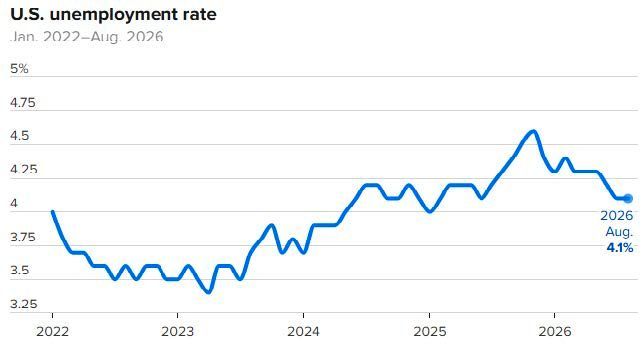
• The U.S. economy added a better-than-expected 162,000 new jobs in August, well ahead of the 53,000 estimate. The unemployment rate remained steady at 4.1%, and the June and July reports were revised solidly higher.
Restaurants and bars led with 59,000 new jobs, while education added 42,000 and manufacturing contributed 16,000. Health care, the primary engine of job growth, saw a gain of just 13,000, compared with the monthly average of 32,000 over the prior 12 months. Average hourly earnings increased 3.1% Y/Y.
The broader U6 unemployment rate actually fell last month to 7.7%. Following the strong jobs report, the probability of a rate hike by year's end increased to 87%.
• August CPI was in line with expectations but likely solidifies the first interest rate hike since 2023. Headline CPI rose 0.4% M/M in August or 3.4% Y/Y, while core CPI rose 0.3% M/M or 2.4% Y/Y. Gas prices jumped 3.9% last month, accounting for more than one of the monthly gains in CPI. Food prices rose 0.1% M/M, shelter costs increased 0.3%, and transportation services surged 0.5%. One way energy prices affect the core CPI is through airline fares, which spiked 23.4% M/M.
• Federal Reserve Chairman Kevin Warsh used his Jackson Hole keynote speech to hammer home a message that curbing inflation is the central bank's highest priority. While Warsh doubled down on his commitment to avoid forward-looking guidance to financial markets, he did offer some clues into his economic views. He warned inflation isn't meaningfully slowing and that policymakers must be confident it is before enacting any monetary easing.
Warsh also added that current financial conditions were not restraining the U.S. economy. After the Fed reiterated its 2% PCE inflation target, markets priced in a higher probability of a near-term interest rate hike.
Nature's Symphony
Source(s): U.S Bureau of Labor Statistics
Manufacturing & Service Sectors Seeing Strong Expansion While Corporate Earnings Are Exceptional
•The manufacturing sector in the U.S. saw continued strong activity in August, as indicated by the ISM Manufacturing PMI. While the headline reading fell from 55.6 in July to 54.6 in August, it remained well into expansion territory, supported by strong underlying fundamentals. New orders, production, and employment all fell last month but remain well above the 50 level that separates expansion from contraction.
The ISM Services PMI strengthened in August on the heels of a surge in new orders, production, prices, and inventories. Survey respondents pointed to strong business conditions but cited higher prices and shortages in areas like memory as potential risks on the horizon.
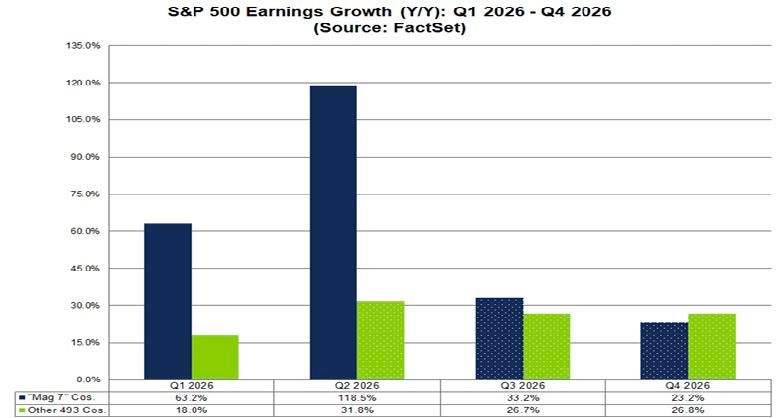
• 97% of the way through the Q2 earnings reporting season for the S&P 500, earnings growth has come in at a remarkable 52%, the highest rate of growth since Q2 2021. The Mag 7 grew earnings by 118.5% in Q2 compared to 31.8% for the S&P 493. Amazon and Alphabet reported huge one-time in nature trading gains that, if removed, would still put earnings growth at 43.2% for the Mag 7. Earnings are projected to grow 25%+ in Q3 and Q4, with full-year 2026 earnings growth at 31%.
PMIs Point to a Rebound in Europe, but China Continues to Flounder
•The eurozone composite PMI hit an 8-month high of 52.0 in August, consistent with 52.0 in the previous month. The pick-up in the rate of expansion reflected an accelerated rise in manufacturing production, with the latest increase the fastest in 4.5 years. In fact, the headline manufacturing PMI – a weighted average of five key sub-indices–rose to 52.8, their highest since May 2022.
The improved manufacturing growth picture was largely centered on Germany, where production rose at the fastest pace since January 2022. Eurozone services activity, meanwhile, increased modestly, with the pace of expansion unchanged from July.
• China's manufacturing activity in August shrank for a second straight month, keeping the pressure on Beijing to support the economy as growth loses momentum. The official PMI reading came in at 49.8 in August, up slightly versus the 49.2 reported in July.
Supply and demand both improved in August, with the sub-indices tracking production and new orders expanding to 50.4 and 50.6, respectively. The smaller-company-focused RatingDog Manufacturing PMI remained in expansion territory for the ninth straight month, with a reading of 51.5 in August. China's official Non -Manufacturing PMI held at 49.0 in August 2026, unchanged from July and below expectations of 49.5, pointing to a continued contraction in non -manufacturing activity.
India Blows Past Growth Expectations
•India's economy expanded 7.8% Y/Y in Q2, blowing past forecasts as an investment boom and manufacturing strength added to already -solid consumer demand. Q2 growth beat the 7.1% estimate but was down sharply from the 8.6% growth clip registered in Q1. Growth is projected to be north of 7% for the full year, with the biggest risk to that forecast being the headwind from higher energy prices and persistent inflation.
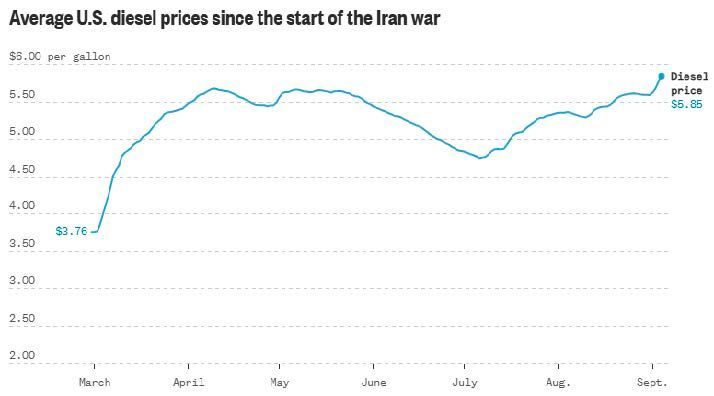
• The price of diesel fuel hit an all -time high on 9/4 as wars on two continents and a global refinery shortage have pushed prices upward. The average nationwide price was $5.85 per gallon, according to AAA's gas price tracker. Russia has long been the world's second-largest exporter of diesel fuel after the U.S. Ukrainian drone strikes on Russia's oil refineries have cut into the country's diesel production.
Facing a potential domestic supply shortage, Russia recently extended its diesel export ban through the end of September, straining already critically low global diesel reserves. Total diesel exports from the U.S. hit an all -time high last month as the world scrambled to adjust to the loss of Russia
Nature's Symphony
Source(s): AAA
Midterms = Wide Range of Possible Outcomes
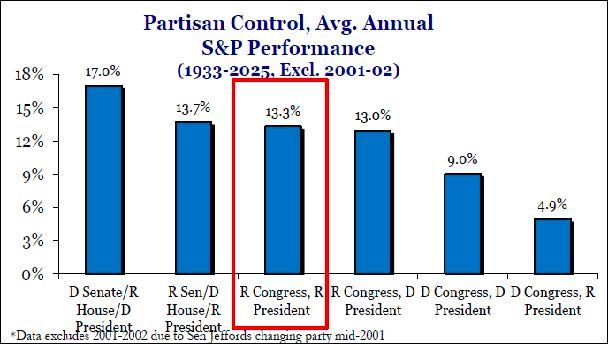
We are 2 months away from the highly anticipated midterm elections, and Democrats are expected to win the House, while Republicans are slightly favored to maintain control of the Senate. President Trump's approval rating is low, typically a bad sign for the party in power entering the midterms. Polls have become less reliable, and the outcome and market impact could be significant.
Divided government is probably the best outcome, as gridlock and a lack of major policy changes are likely to result. Full Democratic control of Congress could also be negative, as another impeachment is possible. Republicans maintaining full control of government is very unlikely, but it could be positive for the last 2 years of Trump's presidency.
In any scenario, the best decision for investors is to remain fully invested, as markets tend to move higher regardless of who controls the government. The economic backdrop, monetary policy, and corporate earnings growth are more important for market performance than who occupies the White House.
Market Review
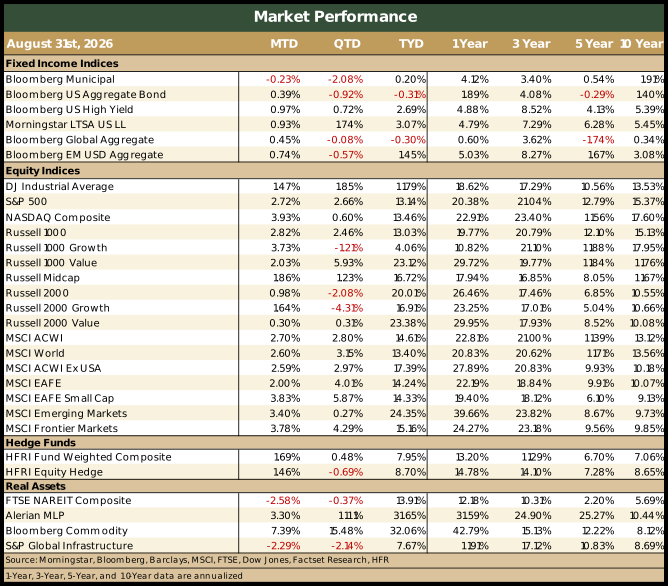
- U.S. equities gained ground across the board in August, led by the rebound in growth/tech stocks. Large caps outpaced small caps, and growth beat value across all market caps.
- 2026 is the fourth straight year of strong equity market gains, and a pullback seems long overdue. Ultimately, much will depend on geopolitical developments and future earnings growth.
- Equities outside the U.S. posted positive returns in August, driven by emerging markets and growth/tech stocks.
- Small caps beat large caps outside the U.S., and growth stocks outperformed value stocks.
- EMs were driven by Eastern Europe and Asia ex -China.
- The weaker USD added 57 bps to EAFE returns and 152 bps to EM returns.
- After surging higher in July, interest rates were generally rangebound in August.
- Core fixed income posted modest gains last month, but Munis ended the month negative due to unfavorable technicals.
- Credit featured another month of largely clipping coupons while bonds outside the U.S. got an added boost from the weaker U.S. dollar.
- Hedge funds broadly gained 1.7% in August, led by macro and equity L/S strategies. Relative value and event funds eked out small gains.
- Real assets posted mixed results in August with gains in commodities and MLPs, and losses in REITs and listed infrastructure.
- Diversification has worked YTD as equity markets have broadened out and investors are benefiting from exposure to real assets, fixed income, and alternatives.
Note: For informational purposes only. Not an investment recommendation. The views expressed are those of Meramec Financial Planners LLC's advisory representatives as of the date of this newsletter. Opinions and any forward-looking statements expressed in this newsletter are subject to change without notice and are not guarantees of future performance. Historical performance figures for the indices are provided for illustrative purposes only and do not represent any actual investments. Index performance assumes reinvestment of distributions. The Indices are unmanaged, and you cannot invest directly in an index. Past performance is no guarantee of future results. Diversification does not assure or guarantee better performance and cannot eliminate the risk of investment losses.